London Citizen Cyberscience Summit (2)

RunCoCo will be attending the London Citizen Cyberscience Summit which is on from Thursday 2 September – Friday 3. (more about the event in a separate blog post). If you cannot attend, you may be interested in following the live streaming. GridCast will be blogging, tweeting (#cybersci) and interviewing people though out the day. More about the event and about Citizen CyberScience in general on the Citizen Cyberscience Centre website.

Posted in events (external) | Comments Off on London Citizen Cyberscience Summit (2)

How do you encourage the public to take part in your community collection project? – Welsh Voices of The Great War Online

Dr Gethin Matthews is wrestling with this problem, as he runs the JISC-funded project, Welsh Voices of The Great War Online.

At the RunCoCo workshop on 27 July Gethin explained how he is trying to get people to come to public submissions days, and now you can see the slides (PDF 1.5Mb) and listen to the audio (MP3 20Mb) from his presentation.
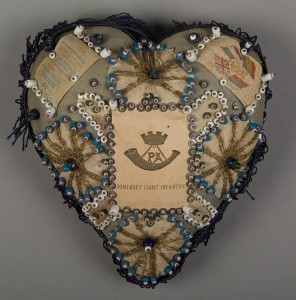
Embroidered heart, photo submitted to The Welsh Voices project

Embroidered heart, photo submitted to The Welsh Voices project

Welsh Voices was inspired, if that’s the correct tone, by The Great War Archive, which we ran at the University of Oxford in 2008. The project has written in detail about engaging with the public in an article in EDUCAUSE Quarterly, (If You Build It, They Will Scan: Oxford University’s Exploration of Community Collections). At RunCoCo workshops we have presented about How the Public Contributed to The Great War Archive (slides with presenter’s notes PDF), (audio 20Mb). With these resources, and with direct advice from the Oxford team Gethin is running an online collection supplemented by public roadshows throughout Wales this summer:

  • St Fagans 24 July (National History Museum)
  • Wrexham 31 July (Bersham Heritage Centre)
  • Ebbw Vale 3 & 6 August (talks at National Eisteddfod)
  • Aberystwyth 17 August (National Library of Wales)
  • Newport 24 August (Newport Museum)
  • Swansea 25 August (National Waterfront Museum)
  • Blaenavon 18 Sept (Big Pit museum)
  • Llanberis 2 Oct (National Slate Museum)

From the presentation (audio 20Mb) on 27 July you can hear the frustration in Gethin’s voice as he describes how he carefully prepared for the first submissions day at St Fagans, for only a handful of contributors to turn up. Apparently it was a similar tale at Wrexham and Aberystwyth. What was he doing wrong? However, with little change in strategy, Gethin reports this week that “we had very strong turnouts at Newport and Swansea. In fact, Swansea was totally manic – they started arriving at 9.40a.m. and kept on coming to the end“. But as Gethin says, this raises more questions than answers. Maybe timing these submissions days during the holiday season affected some events?

David Thomas ("Dai Slogger") from Abertridwr carried this photograph of his wife and child throughout his service with the Royal Field Artillery, image contributed to the Welsh Voices collection

David Thomas (“Dai Slogger”) from Abertridwr near Caerphilly carried this photograph (left) of his wife and child throughout his service with the Royal Field Artillery, image contributed to the Welsh Voices collection.

Gethin had managed to get stories into the local newspapers, and even been interviewed for BBC Radio Wales and the Welsh TV news on S4C. My faith in the icons of Welsh radio in particular was rocked, as Gethin recorded that no-one came to the early submissions roadshows as a result of his broadcast media spots. As found for The Great War Archive, exposure in the local rag is key in motivating people to come. Genuine interest appears to have been piqued for the two most recent roadshows by a story in the South Wales Evening Post, and Gethin has followed up with further news stories like this in the South Wales Argus and from the BBC.

These news stories are just part of the armoury of a project manager like Gethin, who should be using their institution’s press office (Cardiff University press story), as well as social media like Twitter and project blogs. There will also be a wide variety of local community or special interest groups who you should try to get on board, and leaflet drops at local libraries should be considered. This weekend I spent a couple of hours at a local history event at the end of a week long series of talks, and muscled-in with information about the Welsh Voices project. Unknown to me the speaker had mentioned the project in previous talks and I was met with a small group with their family keepsakes and stories, showing the power of Word-of-Mouth and that allowing sufficient time for that interest to spread is paramount.
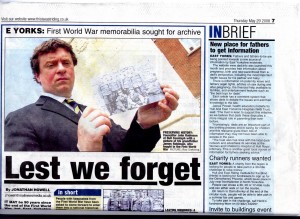
Local newspaper story to attract contributions to The Great War Archive submissions roadshow in Hull, 2008

Local newspaper story to attract contributions to The Great War Archive submissions roadshow in Hull, 2008

RunCoCo will be pulling together all this into guidelines for projects like Welsh Voices of The Great War Online. In the meantime I leave you with some further treasures from the recent public submissions days:

A First World War bayonet brought along to the Welsh Voices roadshow in Newport

A First World War bayonet brought along to the Welsh Voices roadshow in Newport

An example of 'trench art' - a casing from a large shell which had been transformed into an umbrella stand - brought along to the roadshow.
An example of 'trench art' - a casing from a large shell which had been transformed into an umbrella stand - brought along to the roadshow.

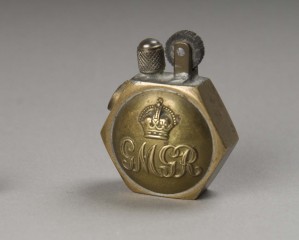
A 'lucifer' - cigarette lighter customised with a Machine Gunner's tunic button

A 'lucifer' - cigarette lighter customised with a tunic button from the man's tunic, (GMGR: Guard's Machine Gun Regiment)

Posted in case studies | 2 Comments

Open Plaques Open Day

The Open Plaques project is holding an open day workshop in London on September 25th, 2010. The free event will include presentations about the project and a practical session where the participants look at how the project can be developed and improved.

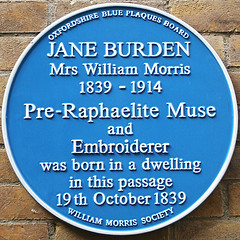
Open Plaque #1010 (Oxford)

Open Plaque #1010 (Oxford)

About the project:

The community?based Open Plaques service started in 2009. The project documents, catalogues and promotes commemorative plaques, with an aim “to bring the people?powered history the plaques encapsulate to life – and to a larger audience – by making its website and database the definitive and most comprehensive resource about these historical markers.” On the Open Plaque website, users can search and browse the collection of plaques by person, place (map interface), or organisation. The plaques are described and in many cases photographed. The majority have also been geolocated, meaning it is possible to see them high-lighted on a map.

About the workshop:

The free Open Plaques Open Day event will be held at Centre for Creative Collaboration in London. It will consist of two main parts:  some short presentations about the project and illustrations of how the data have been used, followed by a practical workshop. In the practical workshop, participants will look at different aspects of the project and map out how it can be improved. The topics for the practical session include:

  • Information Architecture and User Interface of the website, answering difficult questions like how exactly do you browse thousands of different plaques, and what’s the best interface for allowing people to contribute?
  • Design of the website, thinking about an appropriate ‘look and feel’ and designing pages which allow for radically different amounts of content.
  • Content, both in terms of identifying missing and incomplete data, and of working out ways to enrich the content so as to provide a context and understanding of the plaques.
  • Development, tackling the technical side of things such as being able to manage more data, better, and supporting a wider range of users.

More information about the event, including details on how to register, can be found in the Open Plaques blog post.

Image credit: photo taken by Owen McKnight, licensed under Creative Commons.

Posted in case studies, events (external) | 3 Comments

Building participatory archives

In a recent post on her blog ArchivesNext, Kate Theimer discusses the work she is preparing on ‘participatory archives’.

What I’m working on now is exploring ideas about what it means to build “participatory archives.” The concept draws upon the work our colleagues have done in defining concepts for the participatory library and the participatory museum, as well as on the general concept of participatory culture.

She is looking at how the concept ‘participatory archives’ can be used as a framework for other issues, such as:

  • the evolution of ‘citizen culture’
  • how to effectively harness user/partner contributions to the archives
  • ‘community archives’ as found in the UK
  • the need for transparency and openness about, and in the work of, the archivist
  • the role of the archivist and issues of authority in participatory archives

Theimer invites further suggestions for what else to include, and some have been included in the comments to the post.

Posted in case studies | Comments Off on Building participatory archives

Cross-searching workshop in Bristol

The Visualising China Project is hosting a one-day workshop at the ILRT in Bristol on Tuesday 21st September, with presentations and discussion on the topic of cross-searching distributed, interrelated, online resources.

The workshop will tackle topics such as harvesting protocols (including OAI-related solutions), Semantic Web-based metadata integration approaches, presentation layer problems/solutions such as for ranking search results, and scalability/sustainability issues in cross-searching. (from invitation email)

Among the confirmed contributions is a presentation by the Visualising China project on its solution for harvesting data linking to two large, separate image collections. The Connected Histories project will present their experiences in cross-searching more than 10 online datasets. More recommendations for speakers and topics for discussion are welcomed.

If you have suggestions and/or wish to attend, please contact Nikki Rogers as soon as possible: nikki.rogers@bristol.ac.uk.

About the project:

The Visualising China Project is developing a web-based resource where users can explore digitised images of historical photographs of China.  An alpha version allows users to explore more than 6,000 images taken between 1870 and 1950.

The project builds on recent digitisation work undertaken by the Department of Historical Studies at the University of Bristol where a large, growing collection of historical photographs of China was created (some are searchable and browsable at http://chp.ish-lyon.cnrs.fr).

The Visualising China project is funded by the JISC within the eContent Programme.

Posted in case studies, digitisation & ugc, events (external) | Comments Off on Cross-searching workshop in Bristol

Invent it! at the British Library

The British Library is calling on us to come up with problems. Not just any problems but specifically those that we would like to see the next generation of inventors solve.

For their Invent it! campaign the British Library are asking; “What would like to see an invention for?”. Suggestions are collected via their Facebook page and Twitter (hashtag #bipcinvent).

The campaign is part of the Inventing the 21st Century exhibition celebrating British innovation, and the top ten ideas will be announced during Global Entrepreneurship Week (15 – 19 November).

Posted in case studies, events (external) | Comments Off on Invent it! at the British Library

Strandlines Digital Communities

Can you run a community collection where there is little sense of community? The Strandlines Digital Communities is a new project that is determined to do just that. The focus of the project is the Strand, one of the most famous streets in London, an area which the project suggests “… has at present little active sense of community”.  The project will use its interactive website and a programme of activities to reach out to the people who live and work along the famous street  and invite them to contribute with their stories and reflections.

This Work, The Cole Hole, by Clare Brant is licensed under a Creative Commons Attribution-Noncommercial license.

This Work, The Cole Hole, by Clare Brant is licensed under a Creative Commons Attribution-Noncommercial license.

Strandlines Digital Communities will be working with life-writing “a broad and creative field which explores personal life stories, and how they intersect with accounts of the lives of others” (project website). The project will also digitise material from local archives and interview local residents and staff at King’s College. The material will be used to create an online resource where life on the Strand over the past 200 years is documented.

The project will create an online, interactive resource documenting life and work on the Strand over the past 200 years, through stories, audio and photographs. It will combine material taken from the College’s own archive, Westminster City Archives and elsewhere with people’s own photographs and memories, captured through a grassroots digitisation project. (King’s College News Highlights, 18 Aug. 2010)

A further interesting feature of the Strandlines Digital Communities is how it is working with different communities with connections to the area. The project is based at King’s College London and involves different departments there. It also has partners outside the academic community, such as the City of Westminster Archives Centre, the charity Age UK Westminster, and local residents association Odhams Walk Resident Management Ltd. Ben Showers, programme manager at JISC, comments:

“We urgently need to engage communities with the research going on in universities and colleges to ensure that we really maximise these publicly funded resources and findings.  … While the Strandlines project is engaging a community in the heart of London, the approach it uses will form a valuable model for similar work across the UK.” (King’s College News Highlights, 18 Aug. 2010)

The Strandlines Digital Community project is part of a larger venture, ‘Strandlines’, a project aiming to “explore lives on the Strand – past, present and creative”. The pilot project is one of eleven projects funded by JISC under its Developing community content call. A list of all the projects, with links to their websites or project descriptions, is available on the RunCoCo website.

Posted in case studies | Comments Off on Strandlines Digital Communities

A day in your life – community group event

12 August 2010 will be a day that is remembered even if nothing particularly remarkable or memorable happens on the day. This is due to an initiative by the Mass Observation Communities Online (MOCO) project. The MOCO project are inviting members of community groups to send in a one-day diary recording their August 12 day in text, photo, or video form.

With participation across the country, we are aiming to create a national archive of written and photographic accounts that will reflect a day in the life, not only of individuals across the UK, but also of the members of your specific communities. [description on MOCO website]

The material that is collected on the day will be made available to the participating communities. It will also be displayed as part of the MOCO online archive (see some examples) and donated to the historic Mass Observation Archive.

How does it work?

For the August 12 collection, MOCO is targeting community groups. Groups can register their interest in participating and MOCO will create a webpage for them. The groups then invite their members to participate by submitting six photographs or a written account of their day via a form on the MOCO website.

Can I take part even if I am not member of a participating community group?

Although the August 12 collection is targeted at community groups, you can submit a diary even if you do not belong to a group or if your group is not participating. There are also other ways that you can get involved (more information below and on the MOCO website).

Mass Observation – not only on August 12.

If you would like to participate in a Mass Observation collection, there are a number options open to you via the MOCO website:

  • Answer a questionnaire – submit your answers to a 1939 questionnaire on ‘class’.
  • Keep a diary for a day – write as much or as little as you would like about a normal or special day in your life.
  • Observe life in a café – soak up the atmosphere and describe what you see and how you feel about it (can be any scene or activity, not only cafés).
  • Photograph a street – take six photos or make a five minute video of a street or neighbourhood of your choice.

The collections that MOCO are doing are similar work that has been done before. To see descriptions of the research techniques and explore examples of the material that has been collected now and before, please visit the MOCO website.

Mass Observation has always been concerned with documenting the social, political and economic conditions of British life, through the lens of individual experience. [from the MOCO website]

MOquote

Posted in events (external) | Comments Off on A day in your life – community group event

Digital Content Quarterly

Digital Content Quarterly is a magazine published in print and online by the Strategic Content Alliance (SCA): “an initiative created to support citizens in gaining best value from the public investment made in digital content”.

The Strategic Content Alliance works on behalf of the public sector to reduce the barriers that currently inhibit access, use and re-use of digital content and to build a common information environment where users of publicly funded content can gain best value from the investment that has been made.

Oxford University Computing Services (where the RunCoCo project is based) has just become an affiliate member of SCA (more information about affiliate membership).

The Digital Content Quarterly summer issue 2010 features an interesting collection of articles, as briefly outlined below (click on the links to go to the article). For more information, go to the Digital Quarterly website to download the issue or read it online. Continue reading

Posted in digitisation & ugc | Comments Off on Digital Content Quarterly

London Citizen Cyberscience Summit

The London Citizen Cyberscience Summit is a two-day event being held at King’s College, London on September 2-3, 2010. From the event webpage:

“The London Citizen Cyberscience Summit is a great chance for scientists and citizens to learn about the latest breakthroughs in citizen cyberscience. It will be a unique opportunity to brainstorm about how new technologies can enhance citizen cyberscience. A bold ambition of the summit is to draft a citizen cyberscience manifesto, involving all the stakeholders in the field.” http://www.citizencyberscience.net/summit/

The programme offers a series of presentations collected into four themed sessions, as well as two panel discussions:

  • Citizen Cyberscience, Past Tense
    Historical examples of citizen science, distributed computing and distributed thinking.
  • Citizen Cyberscience, Present Tense
    A survey of some of the latest results from citizen cyberscience projects
  • Citizen Cyberscience, Future Tense
    New projects in the pipeline, from all around the world: short pitches by young researchers
  • Citizen Cyberscience, Conditional Tense
    The potential impact of new technologies and social networks on citizen cyberscience
  • Panel Session: The Anatomy of Citizen Cyberscience
    A panel of citizen cyberscientists describe why they volunteer their time for science projects, what they’ve learned from it, and how social networking helps science.
  • Panel Session: A Manifesto for Citizen Cyberscience
    A discussion about the future of the field
    A selection of scientists and citizens from around the world discuss and debate where they think citizen cyberscience should go, and how it might get there.

Among the speakers and projects presenting at the Summit are David Anderson (SETI@home project – Search for Extraterrestrial Intelligence), George Dyson (author of ‘Darwin Among the Machines: The Evolution of Global Intelligence), Myles Allen (ClimatePrediction.net – produce and test climate predictions and models), Tom Humphrey (Herbaria@home – digitising and documenting the archives of the UK’s herbaria), Nicolas Maire (MalariaControl.net – simulation modelling of malaria), and many more. See the programme for details.

The event is open to all. To register, use the online registration form. The very modest registration fee covers entrance to the Summit plus refreshment breaks and lunch on both days.

Posted in events (external) | 1 Comment
