Engaging talks in Aberystwyth

Yesterday, Culturenet Cymru played host to the latest RunCoCo workshop, at the National Library of Wales, Aberystwyth (27 July 2010). We welcomed about 30 delegates to the excellent conference facilities of the National Library. As the dust settles we are preparing to publish the programme, the presenters’ slides, and some audio/video from the day which focussed on engaging communities either online or face-to-face. In the meantime here is something of a photo-story from the day.

I’m the manager of RunCoCo (based at the University of Oxford) and I arrived in Aberystwyth on the day before the workshop, to help the Culturenet Cymru team set up.
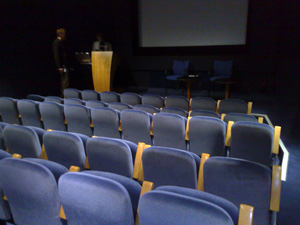
Paul McCann (Culturenet Cymru) and Brian Teeman (brianteeman.net) set-up inside the amazing Drwm auditorium, NLW

Setting-up inside the amazing Drwm auditorium, NLW

After an afternoon spent printing, stuffing delegate packs and making last minute arrangements I chilled-out with a short walk on the coast path above Borth, just North of Aberystwyth.

Mountainous clouds loom over the Cardigan Bay coast, Borth (near Aberystwyth)

Mountainous clouds loom over the Cardigan Bay coast, Borth (near Aberystwyth)

With so many travelling to join us in Aberystwyth we held a friendly evening social before the workshop.
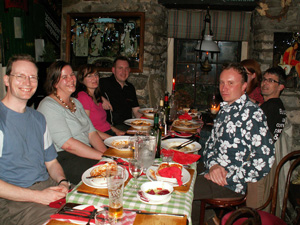
Speakers and delegates relax in a little bit of Italy in Mid-Wales

Speakers and delegates relax in a little bit of Italy in Mid-Wales

The weather closed-in as we made our way to the National Library on the morning of the workshop, and the grey did not lift from the beautiful town of Aberystwyth. The lovely interior of the Library made up for that gloom.
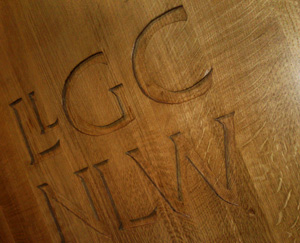
Carving on the spotlit podium, inside the Drwm auditorium
Carving on the spotlit podium, inside the Drwm auditorium

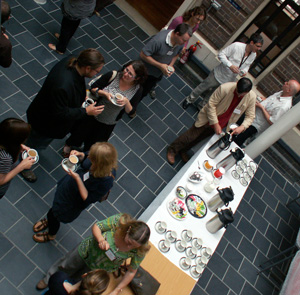
A welcoming coffee (or two or three) in the atrium of the spectacular Drwm auditorium
A welcoming coffee (or two or three) in the atrium of the spectacular Drwm auditorium

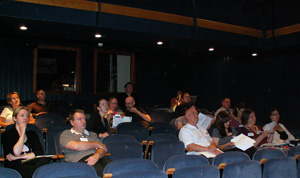
The delegates begin to settle in their seats in the Drwm

The delegates begin to settle in their seats in the Drwm

Dafydd Tudur, manager of Culturenet Cymru, welcomed everyone to the National Library, and the tone for the day was set perfectly by Brian Teeman, (brian.teeman.net and c0-founder of the Joomla open source online content management system).
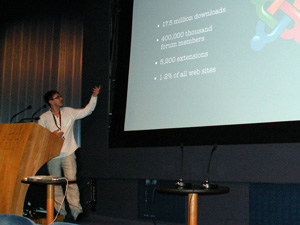
Brian Teeman delivers the key note

Brian Teeman delivers the key note

Dafydd presented about the National Library’s many years involvement in community contributed digitisation projects and the agenda of digital inclusion from the Welsh Assembly Government. Tea and coffee followed with the chance for the delegates to network.
A chance to make connections
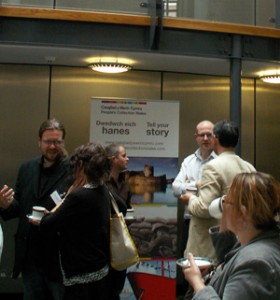
A chance to make connections

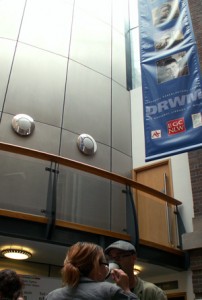
Delegates converse in front of a banner for the People's Collection Wales

Delegates converse in front of a banner for the People's Collection Wales

Presentations from Jenna Bailey, University of Sussex and Gethin Matthews, Cardiff University, described real problems their JISC-funded community collection projects are facing now, and considerered how they have tried to overcome them. These included the risk that a community collection might receive illegal material or the disclosure of illegal activities from potential contributors to the Mass Observation Communities Online (MOCO) project, (website just launched), and the difficulties in attracting contributors to a submissions day for the Welsh Voices of the Great War Online project, (website also just launched).

The Drwm, NLW

The Drwm, NLW

Lunch in the Pen Dinas café in the National Library of Wales – which I’m afraid I failed to enjoy. I could not do justice to the amazing ham in mustard sauce and the towering cheesecake – nerves about my impending session that afternoon. However the conversation was fascinating, my first chance to really engage – a break from sorting out the speakers and the day. So many different views and backgrounds represented – the delegates coming from across the UK, from local authorities, from Higher Education, the voluntary sector and national institutions, as well as the private consultancies which support all of those.

The Presidents Room, NLW

The President's Room, NLW

For the afternoon’s presentations we moved from the Drwm to the Council Chamber and the President’s Room with spectacular views over the town and and the sea of Cardigan Bay.

View from the Council Chamber, NLW

View from the Council Chamber, NLW

Sioned Rees-Jones gave us a preview of the People’s Collection Wales website, which launches next week at the National Eisteddfod. The website is visually stunning, a colourful feast – which the project hopes to match with content contributed by institutions and communities from across Wales and a range of facilities and services (like digital scrapbooks) for the public to re-use and re-arrange the display, e.g. for ramblers plotting a route or for teachers to show their pupils. There is a fascinating video currently available from the beta site where you can hear some of Wales’ most familiar faces talk about the People’s Collection Wales.
Introducing the People's Collection video

Introducing the People's Collection video

The afternoon continued with discussion sessions, punctuated by the chance for tea and cakes and further networking, and ended with a Q&A session with all the speakers, and a generous gift of a book for the delegates from the hosts, the National Library of Wales.

Bara brith and buttered Welsh cakes, fuel for discussion

Bara brith and buttered Welsh cakes, fuel for discussion

I’ll leave you with the enigmatic titles for the discussion sessions, we will post later in more detail about these:

  • Digital storytelling led by Mog (The George Ewart Evans Centre for Storytelling, University of Glamorgan, a partner in the Welsh Assembly Government’s Communities 2.0 programme)
  • Stump the geeks led by Paul McCann (Culturenet Cymru) and Brian Teeman (brian.teeman.net)
  • Getting your message out there led by Alun Edwards (RunCoCo, University of Oxford)

Thanks to everyone who engaged so whole-heartedly in the day!
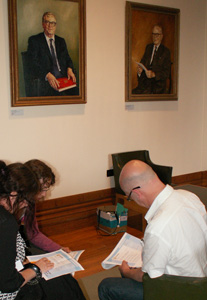
Hard work during one of breakout discussion groups

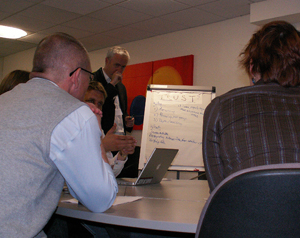
Hard work during one of breakout discussion groups
Posted in events, project news | 5 Comments

Audience Analysis

RunCoCo is working closely with the Alliance (JISC Strategic Content Alliance) to put on workshops this year for community collection projects. We have put some presentations online from events in May – which included an insightful session on IPR and copyright – more to follow. We also have a workshop planned on the subjects of sustainability and business models for community collection projects with the Alliance on November 3rd in Leeds.

We hoped to involve the Alliance in our workshop next week, Community Engagement, at the National Library of Wales on 27 July. However they’re double booked. We will distribute to our delegates some of the Alliance material on this subject – which is so close to the heart of what we will be discussing. But if you will miss our event may I suggest you register for the Audience Analysis workshop – 30th July 2010.

I quote from their publicity below:

I am writing to invite you to attend a FREE workshop from the Strategic Content Alliance (Alliance) introducing simple and inexpensive Audience Analysis techniques. This aims to improve your knowledge and understanding about how to measure and demonstrate the impact of you collection or website beyond a simple numeric value i.e. number of hits. The workshop offers delegates the opportunity to make the most out of their collections and websites using a range of free tactical tools created by the Alliance.

The workshop is aimed primarily at delegates from universities, archives, museums, health, public service broadcasting, schools and cultural heritage. No particular technical knowledge is required as a prerequisite. However, we encourage delegates to consult the free audience analysis documentation at http://sca.jiscinvolve.org/audience-publications/

Why research audiences of online content?

Understanding your online users is an essential technique in order for you to retain and increase “market share” in an increasing competitive online market. Why users visits your collection and/or website, what they are doing, why are they not visiting, how can you demonstrate impact to your boss or funder are all questions that can be addressed by the adoption of recognised techniques highlighted in free tactical tools. As we enter the “perfect storm” of rapid technological innovation, changing user behaviour and budgetary restraint it’s important to be able to demonstrate the “value proposition” of your collection and/or website to management and funders.

Organisations often excel at engaging with physical audiences and developing physical services which meet their needs, and it is now important to understand how audiences engage with digital collections and websites.

Topics covered will include:

  • Maximising access and removing barriers to your content through Alliance tools.
  • What is audience analysis? Why should I do it?
  • Putting audience research into practice – reaping the benefits.

By the end of the workshop, delegates will have:

  • An understanding of the basic principles of audience analysis;
  • Practical hints and tips about where to start researching your digital audiences and how to get buy-in from senior management;
  • Considered how audience analysis can be used to improve a hypothetical online digital service;
  • Reflected on how you could better meet your audiences’ needs;
  • Knowledge of the documentation and support that is available in your sector to help you better understand your audiences;

Date: 30th July 2010: Morning (9.00- 12.15) or Afternoon (1.30- 4.45) sessions**

Venue: JISC London Offices, Brettenham House, 5, Lancaster Place, London, WC2E7EN

Registration: https://www.eventsforce.net/jisc/48/home

**2 identical sessions shall be held in the Morning (9.00- 12.15) and Afternoon (1.30-4.45).

Delegates are asked to choose the session they wish to attend**

Please note for all administrative enquiries, please contact Verena Weigert by e-mail.

Posted in events, project news | Comments Off on Audience Analysis

Sustainability Workshop, Leeds

We are currently planning a RunCoCo workshop in Leeds, November 3rd 2010, putting together an exciting programme around the topic of sustainability and business models for community collection projects. If you would like to be involved as a presenter or if you have any particular questions you would like the event to cover, please contact the project via runcoco@oucs.ox.ac.uk. More details about the event will be published on the website in due course. Registration for delegates will open after the summer.

Posted in events, project news | 1 Comment

Archives Outside: not only for archivists

The Archives Outside blog describes itself as a meeting place for people who care for archival collections in New South Wales and researchers who wish to access them.

As such, it may be easy to think that is may not be relevant to anyone outside NSW or someone who is not directly exploring their collections. To ignore it would be a pity though. The blog does deal with Collections in NSW and publishes on archival topics, such as Preservation, Regional Repositories, and Archives Made Easy. It was through a posting to its Digital 2.0 category it came to our attention though. The article Crowdsourcing for Archives and Libraries lists a number of interesting projects where crowdsourcing is used, not only in archives and libraries in other fields as well. The comments submitted by readers of the article take the discussion further and pose some relevant questions. Do read the article and take part in the message exchange!

Posted in case studies, digitisation & ugc | Comments Off on Archives Outside: not only for archivists

Community collection in the news

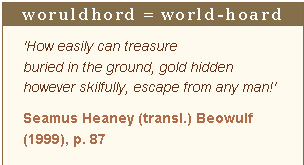
The Woruldhord project opened its online submission site to public contributions this weekend. On Tuesday afternoon, an article about the project appeared in the Guardian. woruldhordThe article describes the project and what it is setting out to do
(“collect together into an online hoard, digital objects related to the teaching, study, or research of Old English and the Anglo-Saxon period of history”). It also puts the online collection in context of two recent events: the discovery of a hoard of Anglo-Saxon gold in Staffordshire, and the appointment of a new professor of poetry at Oxford.

The project director, Dr Stuart Lee, is quoted in the article:

“The archive will be the first mass observation that has ever been done on the period, and will be of use to historians, English literature students, archaeologists, art historians, and the general public,”

Featuring in the article is also a short film based on an Old English poem “The Ruin”. The film is also available on YouTube and has received number of enthusiastic comments there.

“This is still my #1 favorite video on? Youtube. Thanks for sharing!”

“This video got me interested in Old? English,its my favourite poem and i dont even like poems,well done =)”

The YouTube comments also include discussions about language, which shows how engaging the Anglo Saxon period can be. Many also refer to Dr Lee’s lectures on Old English, which are available as podcasts.

The publication of the article is an interesting illustration of the fact that community collections can be news-worthy.

It also shows how you can get national press coverage if you know what channels to go through (such as you university’s press office or similar), how to present your project in a suitable context, and – not least – have a good project to start with! It’d be interesting to hear how other projects have gone about getting press coverage and how that has worked out (or not).

Woruldhord - explanation of term

Posted in case studies | Comments Off on Community collection in the news

Community engagement problems SOLVED

Is there a community engagement issue you would like some help to solve? Or do you want feedback on a piece of work?

We want to give you the opportunity to harness the expertise and knowledge of the speakers and delegates at the free RunCoCo community collections workshop we’re holding in Aberystwyth on 27 July. At the event, delegates will sign-up to one of the problem-solving sessions in the afternoon. They will then work with you as a break-out group for maybe 1 hour, and a ‘recorder’ from the group will report back to the final panel session.

Delegates discuss trust/authenticity issues

Delegates discuss trust/authenticity issues at the RunCoCo workshop, May 2010

Some problems which delegates might help with include, but are not restricted to:

  • writing a press release that has impact;
  • making social media work (Facebook, Twitter etc.) for your project;
  • getting more followers on Facebook or Twitter;
  • writing for blog posts which people will read;
  • getting feedback on your project website;
  • getting feedback on your submissions forms;
  • getting better information from Web stats;
  • optimising your website’s presence in Google;
  • encouraging a local volunteer group to work with you…

If you are interested in getting some help with an issue please email runcoco@oucs.ox.ac.uk as soon as possible. RunCoCo will try to cover some of your travel costs if you are leading one of these problem-solving groups.

The details of the RunCoCo event on 27 July at the National Library of Wales, organised with Culturenet Cymru, are available from our project websiteBooking closes 12 July.

Posted in events, project news | 1 Comment

Your Freedom – more government crowdsourcing

A new government crowdsourcing initiative was launched on July 1:  Your Freedom. This time we are invited to participate to “create a more open and less intrusive society” by suggesting “ideas for removing laws and regulations”. The way it works is simple enough: interested participants can get involved by submitting an idea or by rating, commenting on, and voting for ideas that others have submitted. Anyone can read previous suggestions, which are grouped under various user-generated key words/tags, but you need to register to add ideas or comments.

The initiative has received a certain amount of attention, and is commented on in the press, in blogs, and on Twitter. Although there seems to be a certain degree of scepticism there is also a sense of something new becoming established:

Where previously we voted for leaders and simply then got led, now there’s a sense of judgement far more sophisticated than a mere five-yearly vote. That would not have been possible on this scale without the internet, …” (telegraph.co.uk 2 July 2010)

Not everyone is positive. On his blog, Chris Applegate offers some suggestions for how it could have been done better and concludes “they had their chance to make a valuable public resource, but we’ve instead got another poorly-designed, poorly-maintained failure“.

Some want the government to take this even further: “We believe that the government should go beyond using Crowdsourcing just to source public feedback and opinions and drive Crowdsourcing initiatives into the way in which they govern.” blur Group blog.

There have been technical issues with the Your Freedom site – the site crashed repeatedly on the first day, and there were performance issues also after that. Despite this, it is reported on the site that over 2,200 ideas were submitted the first day together with some 7,000 comments and 18,000 votes. It will be interesting to see what happens now – if these kinds of crowdsourcing exercises will be considered worthwhile by the people initiating them as well as by those who participate and offer their input.

Whenever anything like this launches it is easy to mock (…) or be the first to dismissively declare it has backfired (which may not happen till later). Whether it does or not depends on if the exercise continues and how – or if – the government chooses to act on the suggestions.” Guardian politics blog 1 July 2010

Posted in case studies | Comments Off on Your Freedom – more government crowdsourcing

Ubiquitous Crowdsourcing

There’s a workshop on Ubiquitous Crowdsourcing at the UbiComp 2010 conference (26-29 September 2010, Copenhagen). The deadline for submitting online abstracts for the workshop is July 15 (and July 22 for the paper itself):

“In this workshop we will discuss how to enable the crowdsourcing to its next step of being ubiquitous, where each and every person on earth would be able to participate and contribute.”

Obviously there are computational, service and platform issues to be overcome for the networks to work effectively that connect the crowds to collaboratively solve a problem – and this may be the sole focus of the workshop. Hopefully not though, as the workshop organisers also identify communication and mobility challenges to be overcome. For example, for rapid propagation and trust management crowdsourcing relies on social networks (‘Web 2.0’) but:

  • How do you find the appropriate helpers on Facebook?
  • How do you cope with exposure to the real mass?
  • How do you propagate the model to solve a problem on time?

This workshop has the following themes:

  1. Crowdsourcing model: What are the key components of the ubiquitous crowdsourcing service? What are the requirements from use cases in academia and industry?
  2. Expert and virtual team discovery in evolving networks: How can we describe and categorize experts skills and experiences? Furthermore, for complex tasks, a virtual team of globally distributed experts needs to be assembled, by efficiently matching experts based on skill requirements and social relationships.
  3. Incentives and trust: What is the incentive model that would encourage high quality (trusted) contributions on-line? How do we motivate experts to participate? Furthermore, how does an expert’s reputation get established through interaction with crowdsourcing systems?
  4. Quality Control: What are the novel mechanisms that can be employed to maintain the quality of contributions? How can we distinguish between quality of users when we have so many of them?
  5. Crowdsourcing reaches the mobile: How do crowdsouricng solutions integrate with the mobile platforms? What are the new crowdsourcing applications in the mobile domain?

The overview for the workshop contains a well rounded view of crowdsourcing, mainly from the industry perspective as well as academia (the latter is what RunCoCo is studying):

“With the realization of Web 2.0, the trend of harnessing large crowds of users for the collection of mass data and to solve problems has recently becomes a widespread technique. Over the past few years, more and more domains have adopted this methodology for various purposes, including education, pharmaceutical, Industrial development, and scientific research.
Many methods have been proposed in order to catalyze the involvement of the crowd. The more traditional ones rely on motivating humans to share information and by that either gain creditability or get equivalent information . Other traditional ones provide tangible incentives to people for their work (e.g., monetary prizes). Ahn and Dabbish first suggested the use of games as an attractive mechanism to attract the crowd to perform tasks that are hard for computational engines to cope with. This served as a basis for a number of research extensions.
Currently, Crowdsourcing efforts either evolve via certain communities, or are typically published in an open marketplace in the form of a tender, where participants bid to complete the task, or as a competition, where a winning submission is selected from multiple entries. In addition, crowds are also harnessed through games, in either a collaborative or a competitive fashion.
Crowdsourcing currently captures only active users on the web, and definitely has not yet reached everyone. Despite some of the success stories, such as Mechanical Turk, GoldCorp’s challenge, and Threadless.com, the actual realization of the promising advantages from crowdsourcing, are far from being well-achieved and pose an extensive range of interesting challenges along social, quality control, privacy, trust, and technical dimensions.”

Please note you can’t pay just for this workshop – you must register for the whole conference. RunCoCo won’t be able to afford to send a speaker – but we will look forward to the proceedings and hope there is some way to view streamed channels from the conference itself.

Posted in case studies, digitisation & ugc | Comments Off on Ubiquitous Crowdsourcing

Voluntary sector and consultants welcome

We welcome delegates from the voluntary sector and the education and public sectors, as well as the private consultants that work with these to the free RunCoCo workshop: How to Run a Community Collection Online on Tues 27 July 2010 in Aberystwyth. To register please complete our form by 12noon on 12 July 2010. Confirmation of your place will be sent as soon as possible. Further details of the events are also available on our website and our blog.

This is to clarify that although RunCoCo is funded by JISC and supports the work of JISC-funded community content projects as a primary audience, our events are open to all!

Posted in events, project news | Comments Off on Voluntary sector and consultants welcome

New discussion list – Woruldhord

A new Google Group has been set up to discuss Oxford University’s Project Woruldhord. This is a community collection project where the public (from any nation) are asked to submit items related to the study of the Anglo-Saxons or Old English.

Collection starts 1st July, and continues until 14th October 2010. For more information see the website and the project blog.

Posted in case studies, project news | Comments Off on New discussion list – Woruldhord