Exchange 2010 Detailed Design

The High-Level design has now been completed and is about to be approved – in principle – and we’ll then enter the Detailed Design phase. This is expected to be completed by mid September at which point it can then be signed off and the work will all begin in earnest.

The first parts of our new infrastructure – the bits we know we’ll need, whatever the design – including power distribution boards, rack blanking plates etc. have now been delivered. Our UPS systems for the additional Begbroke infrastructure have also now arrived and are just waiting for the racks in which they’ll reside.

We still have lots more hardware to arrange, some of which is still not firmly specified, but if it all continues to arrive as planned we should be able to begin installing software at some point in October.
Posted in Uncategorized | Comments Off on Exchange 2010 Detailed Design

Nexus upgrade to Exchange 2010

Our High Level Design has now been revised in order to incorporate additional fault tolerance features.

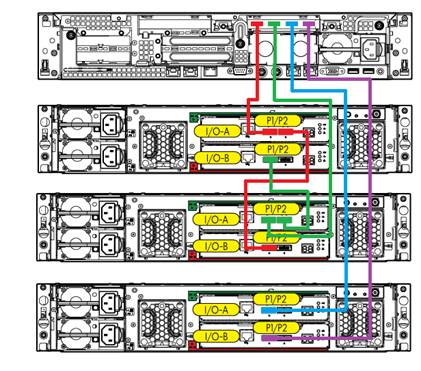
Cascaded enclosures

Cascaded enclosures

We had some concerns with our original design that even a minor failure within a disk shelf  would lead to service failing over to that store’s passive copy. While that in itself isn’t an issue – there still shouldn’t be any user effect – it seemed sensible to revise the plan to ensure that a localised hardware failure would have the smallest possible impact on the system.

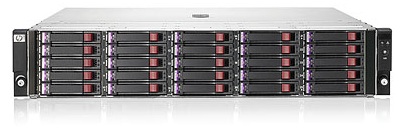
D2700 Disk Enclosure

D2700 Disk Enclosure

So now we intend to attach three (instead of two) D2700 disk enclosures to each mailbox server. The sizing exercise had shown us that we need fewer servers than anticipated so this actually represents a cost reduction too: more fault tolerance and at a lower cost!

Each enclosure contains 25 2½” 10k rpm 300GB SAS disks, giving us a total of 75 disks available to each mailbox server. These will be divided into 22 database LUNs, each utilising one disk from each of the three enclosures, to create a RAID5 array that can tolerate failure of either a single disk or a whole enclosure. This accounts for 66 of the 75  disks.

Transaction logs will be allocated two disks per enclosure, a total of  six disks across the three disk shelves, provisioned as a RAID1+0 array. The remaining three disks will be used to create a two-disk recovery LUN (on which the inevitable ‘I’ve deleted half of my email’ restore tasks can take place) and a hot-spare that can operate across all three enclosures.

Posted in Uncategorized | Comments Off on Nexus upgrade to Exchange 2010