Revealing the Hidden Museum

— By Jessica Suess —

With funding and support from the University of Oxford’s IT Innovation Seed Fund (now IT Innovation Challenges), over the last 12 months a small team of colleagues from the Oxford University Museums and the University’s IT Services Mobile Development Team have been working on a project to look at best practice for engaging visitors in gallery spaces using mobile devices.
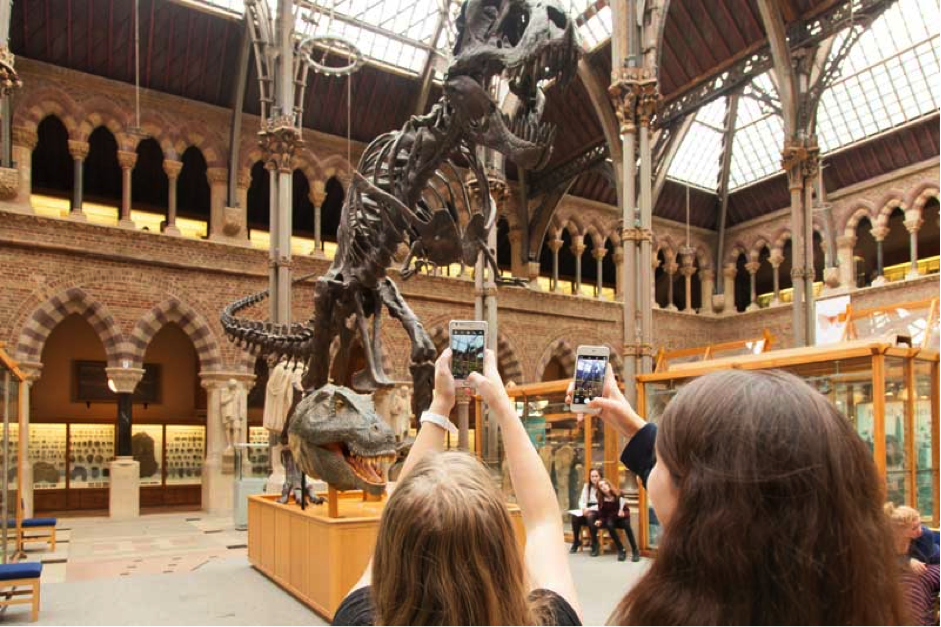
HiddenMuseum

The Challenge

Mobile presents a significant opportunity for museums and other cultural venues to offer engaging content and deeper interpretation to audiences visiting their sites, which simply can’t be delivered using traditional methods. However, mobile also represents a challenge: when visiting a museum or venue audiences are seeking to engage with the historic site and authentic, ‘real’ collections on display. Mobile interactives can be notoriously ‘heads-down’, drawing the user into their device, rather than engaging them with their material surroundings.

In the Hidden Museum project we set out to understand how mobile could best be utilised to deliver engagement rather than distraction. How could we use mobile in a way that does not draw users into their devices, but rather encourages them to look more closely at their surroundings and the objects on display, and through the digital content helps them gain a better understanding of those objects?

Delivering the Project

The project was delivered in three phases:

  • Phase One: Research – We undertook desk research to understand current mobile engagement research and initiatives in order to identify gaps in existing knowledge and frame our research questions.
  • Phase Two: Iterative Testing – Having identified outstanding research questions, we adapted existing mobile content from all the museums for user testing to answer specific questions, making iterative changes to fix problems and address new questions raised.
  • Phase Three: Prototype Development – We developed a prototype app for one of the museums, building on all the learning gathered in the first two phases, and allowing for user testing of a complete experience, rather than component parts.

You can read details about the research and iterative testing phases of the project at http://www.oxfordaspiremuseums.org/blog/hidden-museum-project, where we have shared some of our research questions and key insights gained.

The Prototype

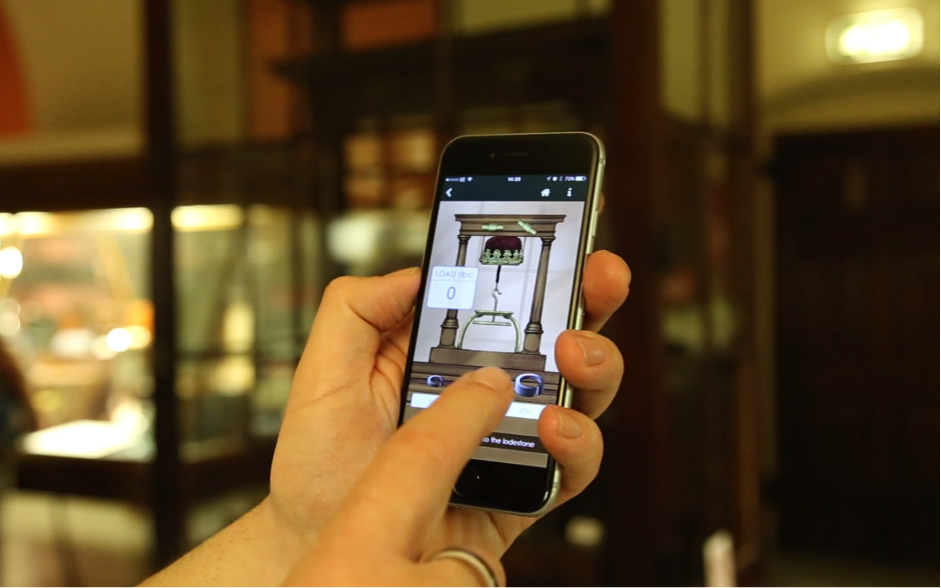
The culmination of the project was the development of ‘Pocket Curator’, an app for the Museum of the History of Science. Housed in the original Ashmolean building, the Museum of the History of Science displays complex scientific instruments, which can be difficult for visitors to engage with when they see them on static display behind glass – scientific instruments are meant to do something! Our aim was to bring these instruments to life by allowing the user to try them out, using their mobile device as proxy.

We built a series of instrument interactives: the user could use their device to simulate the use of a sextant to determine their latitude; experiment with their own digital lodestone; recreate Marconi’s wireless demonstration of 1896; and convert between 12-hour and decimal time, referencing an unusual ‘Revolutionary’ clock with a ten-hour face.

These interactives were imbedded within an app delivering more traditional audio and visual content, optimised to work in the museum space. Audio was broken into short stories focussed on a single topic, allowing the user to dip into areas that interest them rather than listen to long, comprehensive recordings. Video content was presented in an animated style to distinguish it from the objects on display, pushing the user to look from the screen to the object in order to see the details explained. We used image recognition to trigger content, encouraging the user to engage with the object before focusing on the app.
HiddenMuseum2

Next Steps

The prototype, built in iOS only, was well received by our user testing group who found that the engagement increased both their specific understanding of the scientific instruments featured in the app, and their general appreciation of the collections held by the museum.

The success of the prototype enabled us to leverage additional funding to take the iOS app from prototype to product, and develop an Android version, both of which will be released in the app stores in September 2016.

The Team

The core project team comprised Scott Billings, Digital Communications Officer at the Museum of Natural History ; Theodore Koterwas, Web and Mobile Application Team Lead within IT Services; and Jessica Suess, Digital Partnership Manager for Oxford University Museums. However, a significantly broader team of developers, designers, artists and curators contributed their talents to make the project successful; one of the best parts of working on this project was that it was truly collaborative and cross-disciplinary.

Find out a little more about the project at http://podcasts.ox.ac.uk/hidden-museum-connecting-collections-context ; a presentation by the project leads as part of the Digital Humanities at Oxford Summer School.
Posted in Completed projects, Projects | Tagged , , , , | 4 Comments

Building a Writing App

By Noreen Masud

Good writing requires structure and depth, a well-planned architecture with a clear route from beginning to end. As writers and teachers, we are grateful for the IT Innovation Fund’s award to design a writing application that will engage students in drafting units of connected, continuous text.  Despite the growing need for constructive writing supports, such a tool, let alone an app, does not exist.

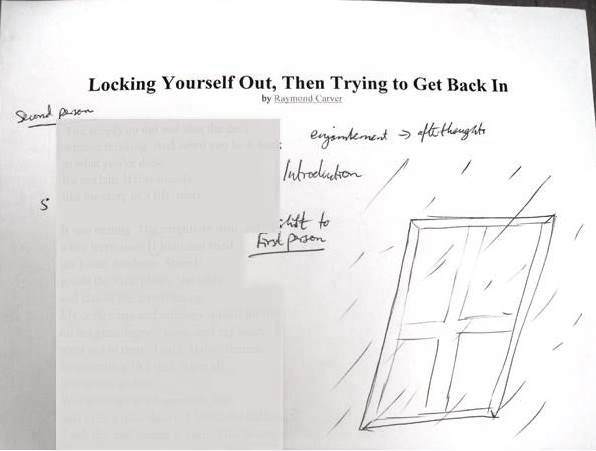
Following the award, the team has been undertaking research to refine the app’s pedagogical focus. It was important, we felt, that the app’s design and function rose out of students’ intuitive beliefs and values about writing. To be accessible, the app must dovetail with writing strategies which are familiar from school and early university life. Project leader Sally Bayley, a university lecturer with twenty years’ experience of teaching writing, therefore ran a series of five workshops with school and university students, over May-July 2016, to explore the metaphors which they instinctively bring to their essays.

HomeR1b

Student response to an exercise from the first workshop. Is an essay a ‘window’ into a text?


Do they think of their essays as rooms which they move through? As journeys through their arguments? How do they visualise their moments of transition?

After each workshop, our team – including a digital narrative expert and an animator – discussed the findings. We considered the metaphors that students used instinctively, and used them to devise new workshop activities which situated these metaphors in hands-on, practical writing tasks.

HomeR2

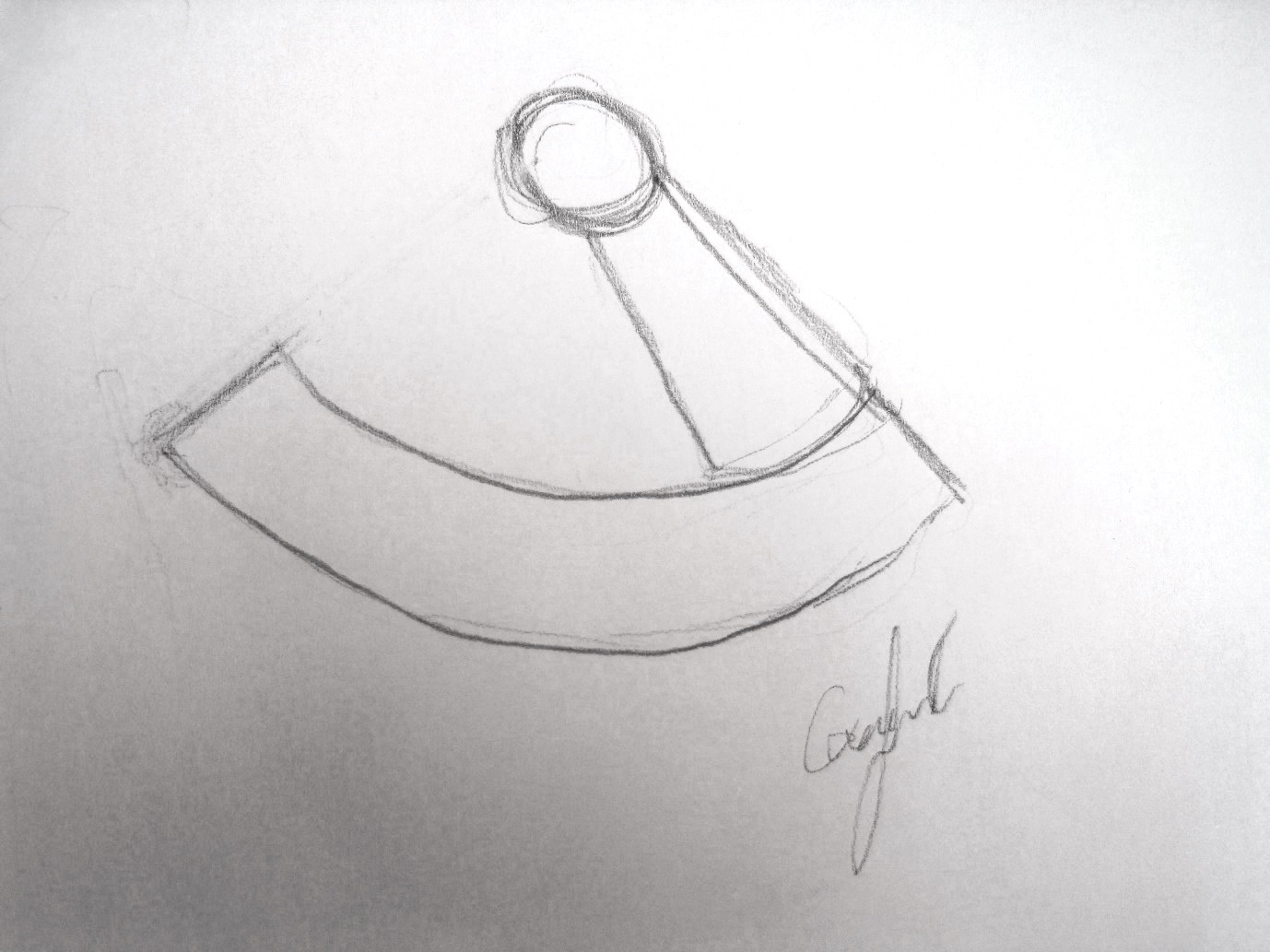
Diagram of how one student visualises their essay structure.

Building on the findings from these workshops, we currently envisage that the app will support students to identify the most important ‘agents’ in their argument (in an essay about epistolary fiction, for instance, the genre of the letter might be the most important actor) and to think about the way in which the agents act. Does the letter, for instance, instruct, or subvert, or connect?

Based on this plan, we have devised a basic ‘paper test’ which we are using with summer school students. The results of this test will feed into the creation of a design specification in August.

Thanks to students from Lady Margaret Hall, Cheney School and Wood Green for their participation in the workshops – and of course to IT Innovation!

Posted in New projects, Projects | 1 Comment

IT Innovation get-together

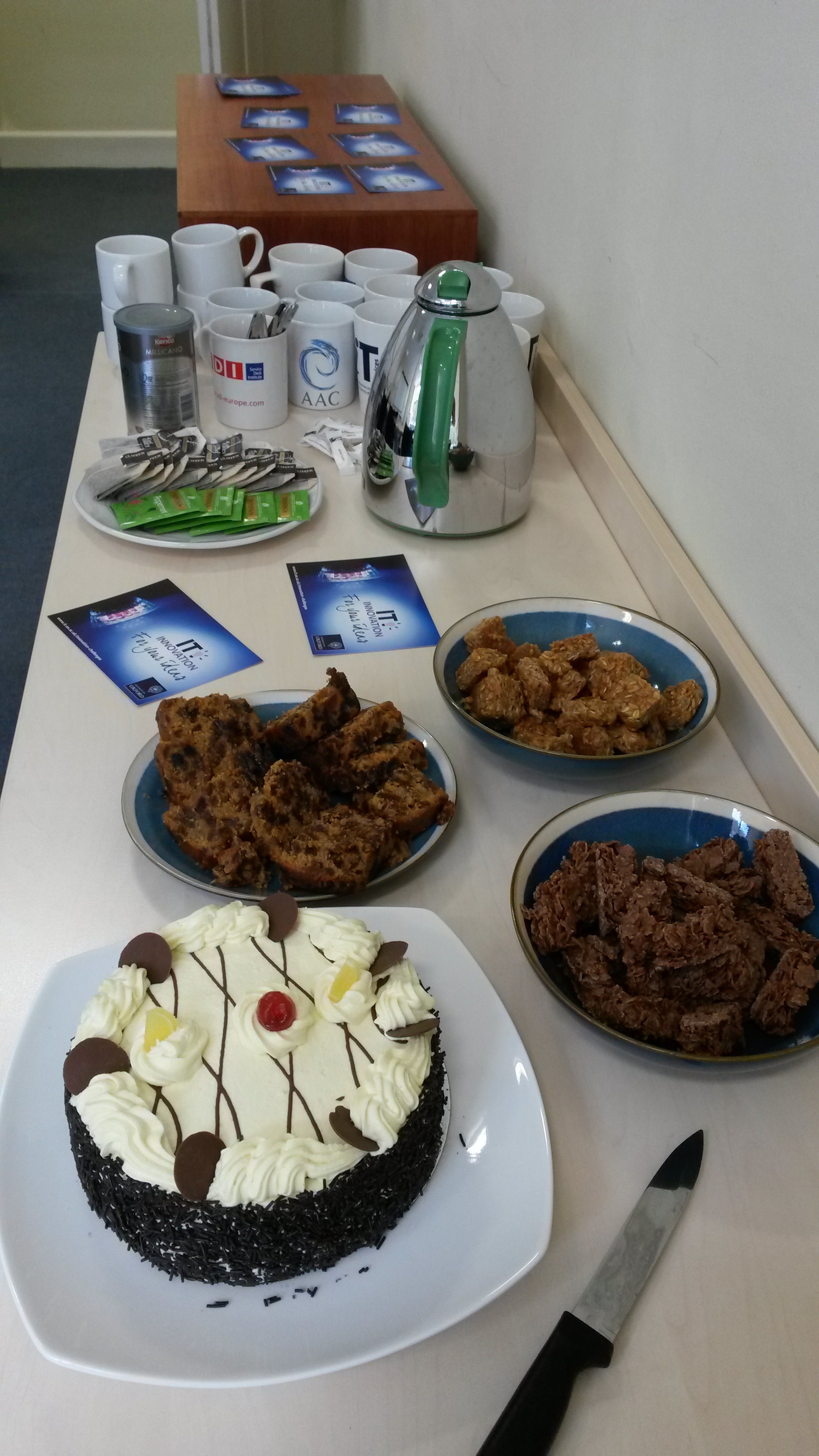
get-togetherJuly2016Inspired by comments at the latest kick-off meeting, IT Innovation held an informal get-together for current projects on July 27. Despite summer being upon us, nine projects were able to attend and contributed by sharing experiences and ideas over cake and tea. There were representatives from both student and staff projects, and from projects at all stages of completion, from new projects that have not yet started to projects about to finish. It was truly inspirational to hear the participants talk about what they do, sharing experiences and suggestions, and some good ideas for future work and collaborations emerged. It was suggested that cross-project contact be facilitated further, and we will look to do that, for example by sharing contact details, publishing more up-to-date information about projects, and arranging further sessions like the one just held. With cake, of course.


Posted in Event, News | Comments Off on IT Innovation get-together

Bringing the Zooniverse to Facebook

logo from WildCam Gorongosa on Facebook

logo from WildCam Gorongosa on Facebook

By Roger Hutchings

Zooniverse is the world’s largest and most popular platform for people-powered research. This research is made possible by volunteers — hundreds of thousands of people around the world who come together to assist professional researchers.

A 2014 survey of our volunteers showed that they tend to fall within the 35 and older age bracket. However, our projects also have Pages on Facebook, and the audiences for those tend to be younger, aged 25 and under. Facebook has been around a good long time now, and so there should be a fairly even distribution of users across ages – this led me to believe that we’re aren’t doing enough to convert our audience on Facebook into volunteers.

So to see if we could use Facebook’s social features to get this younger demographic involved in citizen science, we applied for a grant to convert some of our existing projects to run on Facebook’s app platform, called Canvas.

Our first project was Wildcam Gorongosa, which asks volunteers to classify images taken from Gorongosa National Park in Mozambique in order to track the wildlife conservation efforts there. This is now live on Facebook at https://apps.facebook.com/wildcam-gorongosa/

The requirements of the Facebook platform changes how we build our apps slightly. The majority of our custom projects are single page apps, which we deploy to Amazon S3 as static files. But Facebook requires us to package up those apps with their own individual servers as well, to make a secure initial request for sharing login details. We’ve got around that by packaging apps inside Docker containers, which we can deploy on Amazon Web Services as and when needed.

The next big challenge is integrating the two different login systems at work at the Zooniverse and Facebook. However, once we do that, our users can operate seamlessly between the “normal” Zooniverse apps and Facebook; and Facebook login lets us take advantage of the really powerful social features available, like inviting your friends, or competing with them for classifications.

Posted in Completed projects, News, Projects | Tagged , , , | 1 Comment

June update

June started with the pitch event for the Spring 2016 challenge.

The panel was impressed by the ideas and presentations, and offered funding to five projects, four of which have now signed the official award agreement (the fifth project has accepted but the actual paperwork has not yet been completed):

  • Diversifying the University Voice – researcher/student mobile trails. Based at TORCH in collaboration with the Pitt Rivers Museum
  • Effective Computing for Research Reproducibility. Based at the Department of Anthropology
  • Methodicate – reproducible data science. Based at the Ludwig Institute for Cancer Research
  • Multisensory Access – bringing visual art to life through touch and sound. Based at Oxford University Museums

Once the agreements were signed, accounts are set up and the funds are transferred to the lead department to administer.

June has been a busy month not only for setting up the new projects but also for getting the students projects, funded in the autumn round, ready to run, if they have not already started. As these projects are administered through IT Services and not through the project manager’s department, Innovation staff are involved in helping the projects draw up contracts and make purchases, as well as the important task of making sure project staff can get paid for their work. It is always interesting to see how different people approach their projects, and it is rewarding and stimulating to follow their progress.

On June 25, Innovation staff gave a presentation at the annual conference for IT Support Staff, introducing the IT Innovation scheme and general experiences of running the scheme, in addition to high-lighting some of the past and current projects. Interest was good, and we hope to see some interesting new projects appearing, supported by the talented IT support staff across the University.

Posted in News | Comments Off on June update

Spring 2016 – successful projects

Following the IT Innovation pitch event on June 1st, these projects have been offered and accepted funding:

  • Diversifying the University Voice – researcher/student mobile trails. Based at TORCH in collaboration with the Pitt Rivers Museum (abstract)
  • Effective Computing for Research Reproducibility. Based at the Department of Anthropology (abstract)
  • Embedding Innovative use of Wikimedia across the University. Based at the Bodleian Libraries (abstract)
  • Methodicate – reproducible data science. Based at the Ludwig Institute for Cancer Research (abstract)
  • Multisensory Access – bringing visual art to life through touch and sound. Based at Oxford University Museums (abstract)

The projects will be starting in the next couple of months and we are looking forward to working with them. Look out for more information about the new projects on this blog.

Posted in New projects, News, Projects | 1 Comment

go_girl Symposium

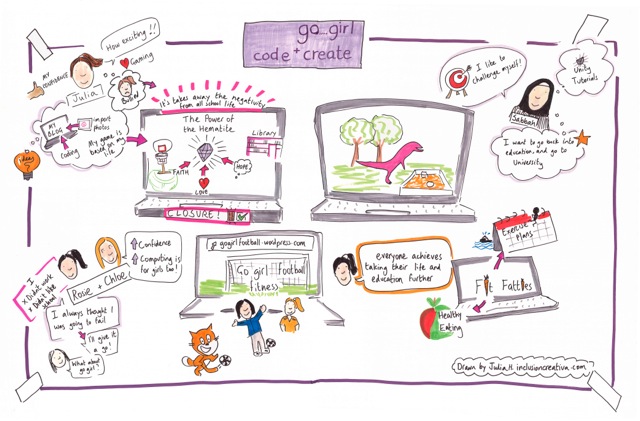
go_girl illustrated

go_girl illustration by Julia Hayes CC BY-NC-SA

(by Anne Geniets)

go_girl: code + create is an interdisciplinary project at the Department of Education. In line with Oxford’s targets in its Access Agreement with the Office for Fair Access, the project set out to complement existing programmes aimed at widening access to the University of Oxford, but tackles the problem in a fundamentally new way using technology. The research is supported by the University of Oxford IT Innovation Seed Fund.

Over the course of a year, the project has trained young women from non-traditional academic backgrounds in IT-, research- and media skills through weekly sessions. The programme culminated in a symposium on 8th June, at which some of the young women presented their (work-in-progress) projects to an interdisciplinary audience.

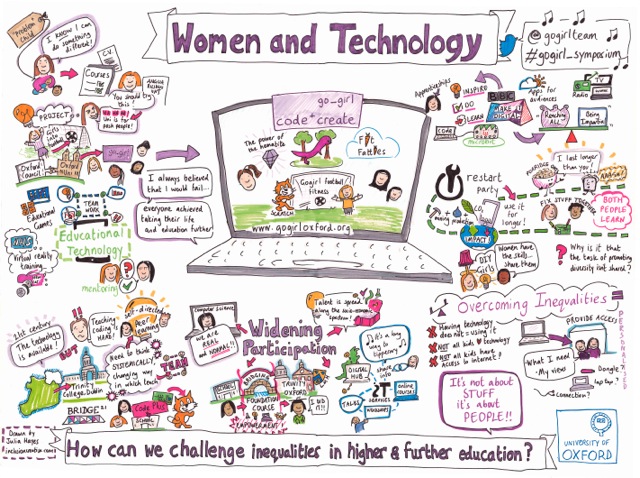
Pictureboard illustrating the day. By Julia Hayes CC BY-NC-SA

The Symposium focused on the issue of ‘Women and Technology: How can we challenge inequalities in higher and further education?’. An excellent set of presentations, panel discussions and artwork by symposium delegates from the media- and IT Sector (BBC Make it Digital, LEO, IT Services of the University of Oxford, Department of Computer Science, Trinity College Oxford and The Restart Project) and Widening Participation programmes (Department of Education, LMH Foundation Year, the Trinity Access Program, and the Widening Participation Team of the University of Oxford) contributed to an engaging debate about this important issue. For more information about the event or the go_girl: code+create project more generally, please visit our blog – www.gogirloxford.org


Posted in News, Projects | Comments Off on go_girl Symposium

Project presentation: Bibliotech

By David Sherwood, project manager of the 2015 Bibliotech IT Innovation student project

Bibliotech is the Spotify for Textbooks. Undergraduates find textbooks awkward and overly expensive. We make the entire reading list affordable and provide an advanced search engine navigates for you. We are currently scaling our chemistry and biomedical science catalogues licensed from Oxford University Press across the UK, before expanding internationally.

Our Oxford IT Innovation Project provided free access to our app for Oxford University chemistry undergraduates and to customise our app and advanced search engine for their needs. The funding came at a critical moment before we had finished our pilot which then enabled us to raise a seed investment round. Over the course of the project our search engine developed from a simple index matching to being able to return definitions, diagrams and examples most relevant to the students assessment question.

I would recommend the IT Innovation Challenge to all Oxford students and staff interested in developing an app. Taking a problem encountered by students and staff at the University may happen to address a much wider market.

Posted in Completed projects | Tagged , , | Comments Off on Project presentation: Bibliotech

IT Innovation Challenges 2016/17 to be suspended for staff

Following a meeting of IT Committee on Monday 18 April where the financial challenges faced by the University and particular the IT Capital Plan were discussed, it was decided that for 16/17 the IT Innovation Challenges for staff will be suspended. The Student IT Innovation challenge in 16/17 however will run as normal. IT Committee will review the decision during 16/17 after the level of funding for overall IT Capital investment going forward has been decided, and based on any other feedback it receives. 

The OxfordIdeas site will remain to promote and support the projects currently underway. The University has a site licence for the OxfordIdeas platform and support can be given to units or projects who wish to use the crowd-sourcing platform for their own projects.

If you have any questions or comments on the future of the IT Innovation Challenges, or wish to ask about using the ‘OxfordIdeas’ platform for your own initiative please contact: innovation@it.ox.ac.uk.


Posted in News | 1 Comment

May update

University Park, 19 May 2016 (CC BY-SA YBP)

University Park, 19 May 2016 (CC BY-SA © YBP)

In the lovely month of Maying, activities for IT Innovation Challenges have centred on new projects. Some of the student projects have started and are making good progress. Others are not due to run until the summer, but even there the project managers have been busy preparing and getting everything in place, organising contracts for staff and contractors and planning the work.

The ideas shortlisted in the Spring round of challenges have been writing their project proposals and preparing for the pitch event, which was held on June 1st. A list of the projects who went on to receive funding will be made public as soon as all projects have accepted their offers of funding.

The news that there will be no staff Challenges in the coming year may be disappointing, but we are pleased that we will be able to run a student round. Planning has just started for the coming year, and more information will be provided about the activities we are planning to support students who are interested in the scheme. If you have any ideas or suggestions for how we could reach even more students, please do get in touch at innovation@it.ox.ac.uk.


Posted in News | Comments Off on May update